
Written by
Reviewed by William Cooper
Follow us
If you’ve ever found yourself wondering ‘when was my house built?’, you’re not alone. Learning the history of your home helps with repairs and maintenance, but it also adds depth to its story.
If you weren’t the first to live there, it’s natural to wonder who came before you, what their lives may have looked like, and how far back your home’s journey really goes.
Whether you’re motivated by curiosity, planning renovations, or need answers for your home insurance, this easy-to-follow guide will walk you through what you need to know to discover the age of your property. It’s often easier to find than you may expect.
Key takeaways you should know
Why your home’s age matters for insurance, renovations and resale
How to check title deeds, land registry and planning records
How architectural styles can help you estimate build dates
Why knowing your home’s age is crucial for homeowners
It’s useful for calculating the cost of home insurance
To properly assess risk, your insurer will need to know when your home was built. This is particularly important for high value home insurance, as older properties which require more maintenance and specialist repairs will likely need specialist cover.
It’s important in predicting the cost for home renovations
Knowing your home’s age can help you to better understand what materials and techniques might be needed when renovating. It’s also helpful if you’re looking to take out renovation insurance.
It can help you to better understand your property rebuild value
Calculating your rebuild value is key when getting a quote for home insurance to avoid being left underinsured. This calculation is typically based on the age, size and structure of your home, all of which will help to determine how much it would cost to rebuild from the ground up.
It matters when you need to sell your property
Buyers often ask about a property’s age as it can affect market value. This is especially important if your home has historic or of architectural significance which can be very attractive to buyers and potentially increase the value of your property.
How do I find out when my house was built?
1. Check the title deeds
Title deeds are one of the quickest and most reliable ways to find out when your house was built. Look for:
- The first transfer date from developer to owner
- A “year built” section, if available
You can request these from HM Land Registry.
2. Search the land registry
The Land Registry holds property ownership records. Make sure you’re using the right one for your location:
England & Wales: HM Land Registry
Scotland: Registers of Scotland
Northern Ireland: Land and Property Services
These records may include transfer dates and other clues about when the property was first registered.
3. Speak to your local authority
Local councils hold planning records that can reveal when a house was built. They may be able to:
- Check when planning permission was granted
- Provide building control documents
This method can take some time depending on how busy your local authority is. You can start by checking the Planning Register.
4. Check historical maps
For older homes (pre-1940s), historical maps and archives can be a treasure trove. Try:
- Ordnance Survey maps
- Census records
- Listed building registers
Start with the National Archives or Bombing Britain if your area was affected during WWII.
Other ways to find out when your property was built
If you’ve exhausted all the areas above and hit a dead end, don’t give up yet. It might take a little more detective work but there are more things you can try to get an idea of when your property was built – often, behind that striking architecture – there’s more than meets the eye.
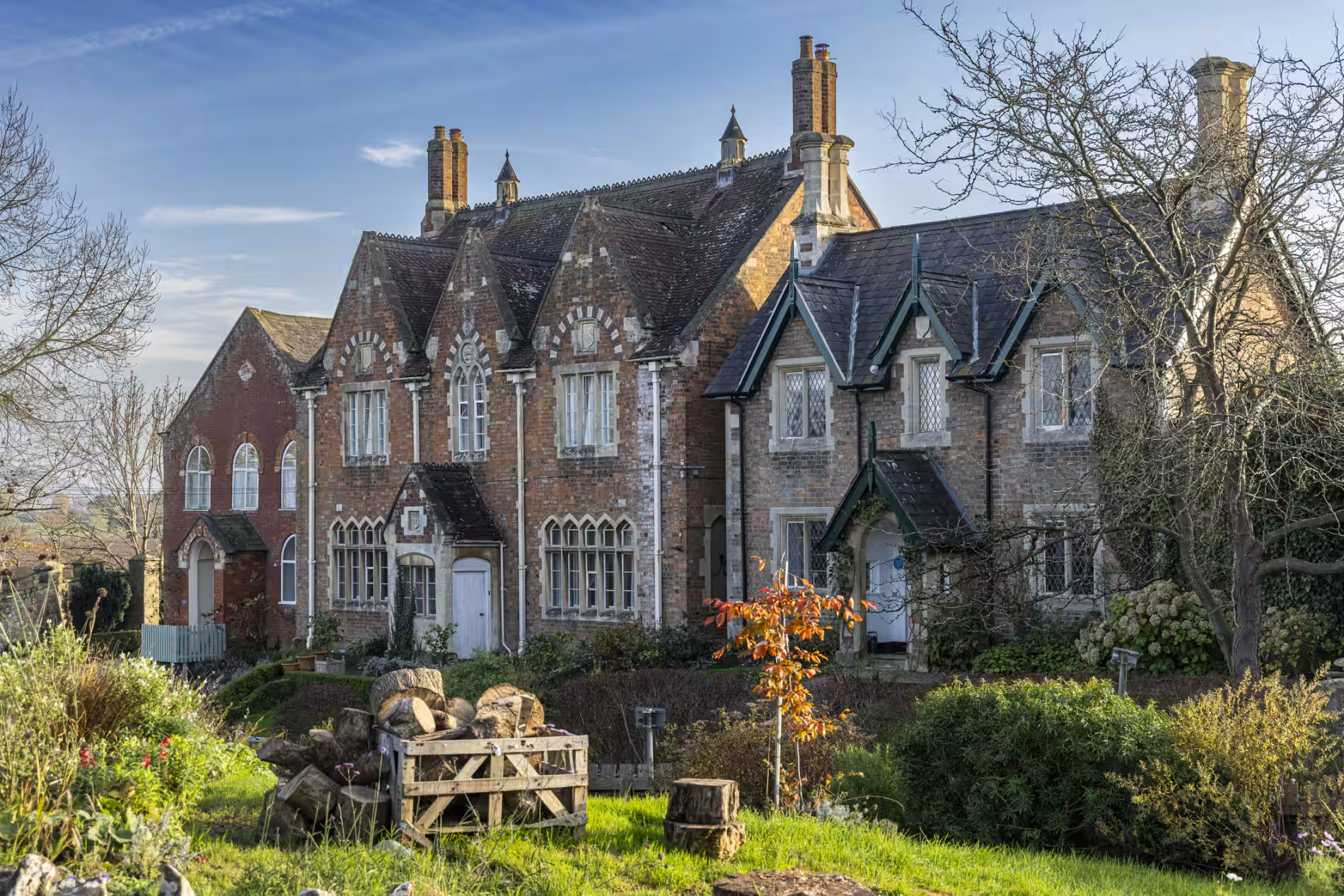
Pay attention to architectural styles
Your home’s design can offer clues about its age. Here are some common styles:
Tudor (1485–1603): Timber-framed, black and white exteriors
Stuart (1603–1714): Flat-fronted, bare stone or brick
Georgian (1714–1837): Symmetrical, sash windows, often three stories
Victorian (1837–1901): Bay windows, high ceilings, terraced or semi-detached
Edwardian (1901–1914): Wider hallways, red brick, less ornate
Post-war/Modern (1945–Present): Functional design, standardised construction
If your home is Grade II listed, its architectural features may be documented in public records.
Ask your neighbours
Long-term residents may know when your house – or the street – was built. Previous owners can also be a goldmine of information, especially if they’ve done their own research into nearby properties. You might also consider tracking down an amateur historian with an interest in the area. If you don’t know anyone like that, you can try putting the feelers out on your local social media group – a keen enthusiast may be more than happy to help get to the bottom of the history of your home.
Frequently Asked Questions
Can I find out the exact year my house was built?
How old are homes in the UK on average?
Can I get a list of the previous owners of my house?
How can I find out when my property was built if no data is available?
Will a rebuild valuation survey help with finding the year of build?
Final thoughts
Knowing when your house was built isn’t just nice-to-know. It’s essential knowledge when it comes to fully understanding the risks your home faces and how best to keep it maintained and protected.
Whether you’re applying for high value home insurance, renovating, or selling, understanding your home’s age helps you make informed decisions.
At Stanhope, we offer free, no-obligation consultations for any customers looking to explore the most suitable insurance for them. We will provide you with all the information you require and clear comparisons, so you can make an informed decision that works for you. If you’re unsure about your home’s true rebuild value – we can support with that too.
Get a quote now
Interested in my situation and found a suitable product without a big fuss – thank you.
5 Star Review ReviewsIO
Written by Matthew Ashton
I started working in the insurance industry in 2004. Four years later, I left to focus on theological studies, working as a youth worker and then as a ministry director in Seattle, USA. When returning to the UK, I had an opportunity to work for the late Andrew Marchington. I joined his firm as a sales advisor when it had around ten staff members. Within three years, I was Head of Ops with a staff team of over 30 people. After a chance encounter in 2019 with Rachel Living and Will Cooper, I co-started Stanhope to build a high-value home, luxury watch, and jewellery broker synonymous with trust. I love being with Donna, my wife, and four kids when not working, cramming in the odd row, or run when I can. I am fortunate to love what I do and consider it a blessing to grow the Stanhope brand.