
Written by
Reviewed by William Cooper
Follow us
What is Second Home Insurance?
A second home, also known as a holiday home, weekend home, pied-à-terre or weekday residence, is a home you own that isn’t usually lived in daily.
Second home insurance is a specialist type of insurance that covers these properties used in this way. Second home insurance differs from standard home insurance because, traditionally, these types of properties can be left unoccupied for longer periods as they tend to be used for different reasons. For example, you might have a property that you rent out to tenants or a home you use occasionally to escape from the hustle and bustle of city life, where you wake up listening to the waves lapping on the shore. If you own a property like this, you should consider specialist second home house insurance. From a secluded manor in the Cotswolds to a prestigious London pied-à-terre, find bespoke second home insurance for every property type.
Why do you need second home insurance?
As it’s not your main property and will likely at times be left vacant, if something goes wrong, it might not be noticed immediately, and this could mean that the price to repair it is higher. A vacant second home may be at higher risk of theft, vandalism and water damage due to burst pipes.
You should consider second home house insurance if:
- The property is unoccupied for more than 30 consecutive days.
- You have a holiday home used seasonally or rented to paying guests, including Airbnb use.
- You let the property to tenants rather than live there yourself.
- The property is used as a weekday or weekend house.
- The property is not furnished for everyday use (i.e. there are no beds, sofas etc).
You should not consider second home insurance if your property is vacant or unoccupied, as this is a different type of risk altogether. Read our guide on everything you need to know about empty homes, or head straight over to the unoccupied home insurance to choose the right insurance for your property.
Most popular policy benefits:
We can arrange cover for buildings and contents, as well as accidental damage and any liabilities you have as the property owner.
- No upper limit on building’s cover, but up to £1,000,000 automatically included with many of our products.
- Property owners’ liability of up to £5,000,0000 for let properties but can go up to £10,000,000 when combined on a high value home product.
- Buildings and contents combined insurance or buildings in isolation.
- Option to insure with your main home on one policy or separately.
Should I insure a second home on its own or with my main home?
It all depends on your insurance budget, the level of cover desired, and the sums insured required for both properties.
If you insure your main home with a high value home insurance product, then you may benefit from more flexible terms on your second property if you add it to your existing policy.
However, if your main home is insured with a standard online product, then a separate insurance policy for your second property could be the way forward. Once we assess your needs, we can recommend the most suitable solution and provide second home insurance quotes tailored to you.
How much is second home insurance?
The cost of specialist second home insurance is never fixed, as the premium is calculated based on a careful assessment of the unique risk factors associated with your property. It is important to note that specialist second home insurance quotes can be higher than standard primary residence insurance because the property is generally viewed as a higher risk when unoccupied.
Key factors that can determine your second home insurance quote include:
- Rebuild cost and sum insured: The professional estimated cost to fully rebuild the property, not its market value.
- Property usage: Whether the home is exclusively for private family use or if it is regularly let out commercially to paying guests.
- Location risk profile: The geographical location, including local crime rate and specific environmental hazards such as flood or subsidence risk.
- Security measures: The presence and certification of advanced security features, such as monitored burglar alarms, CCTV, and high-quality locks.
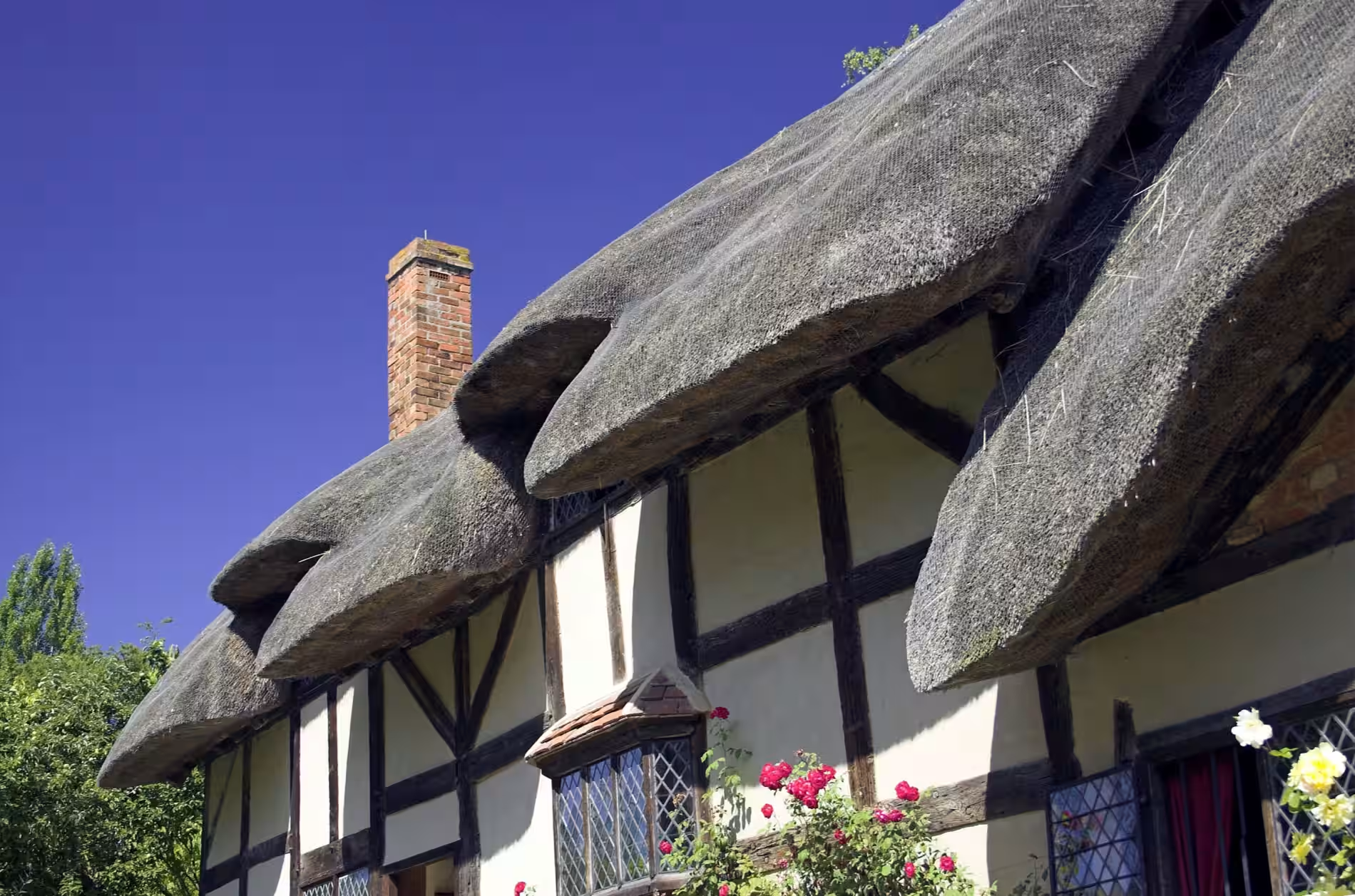
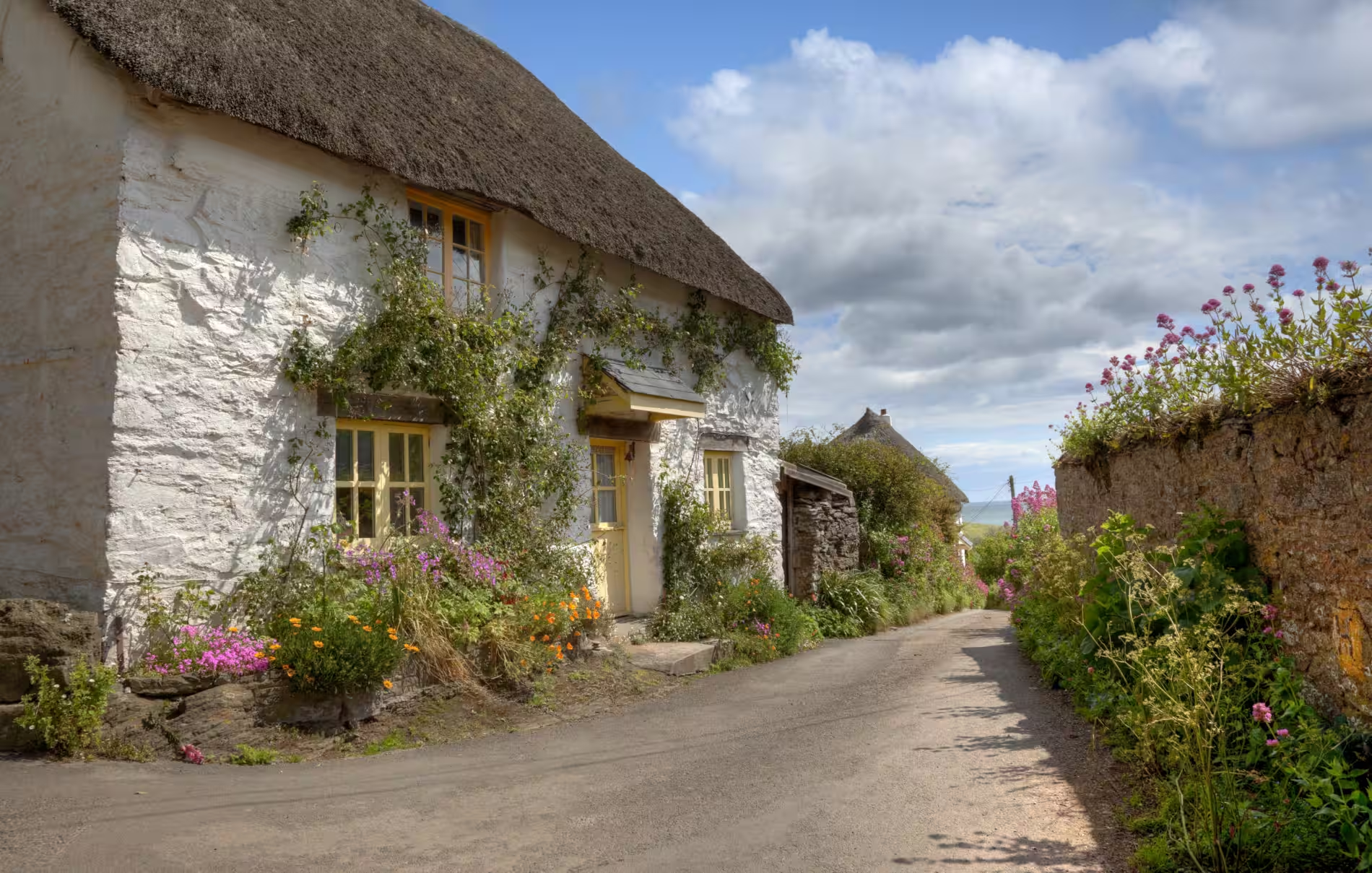
- Construction type: Non-standard construction materials, such as thatched roofs, timber frames, or Grade II Listed status.