
Written by
Follow us
At a glance
The value of some possessions comes from the fact they belong together, rather than what each individual piece is worth.
● A matching replacement isn’t always possible, particularly for antiques, inherited pieces and bespoke items.
● Losing one item can affect the value, appearance or completeness of an entire collection.
● Pairs and sets cover can help protect the whole, rather than just the missing or damaged item, where policy terms are met.
● Keeping valuations and records up to date helps ensure your possessions are properly insured.
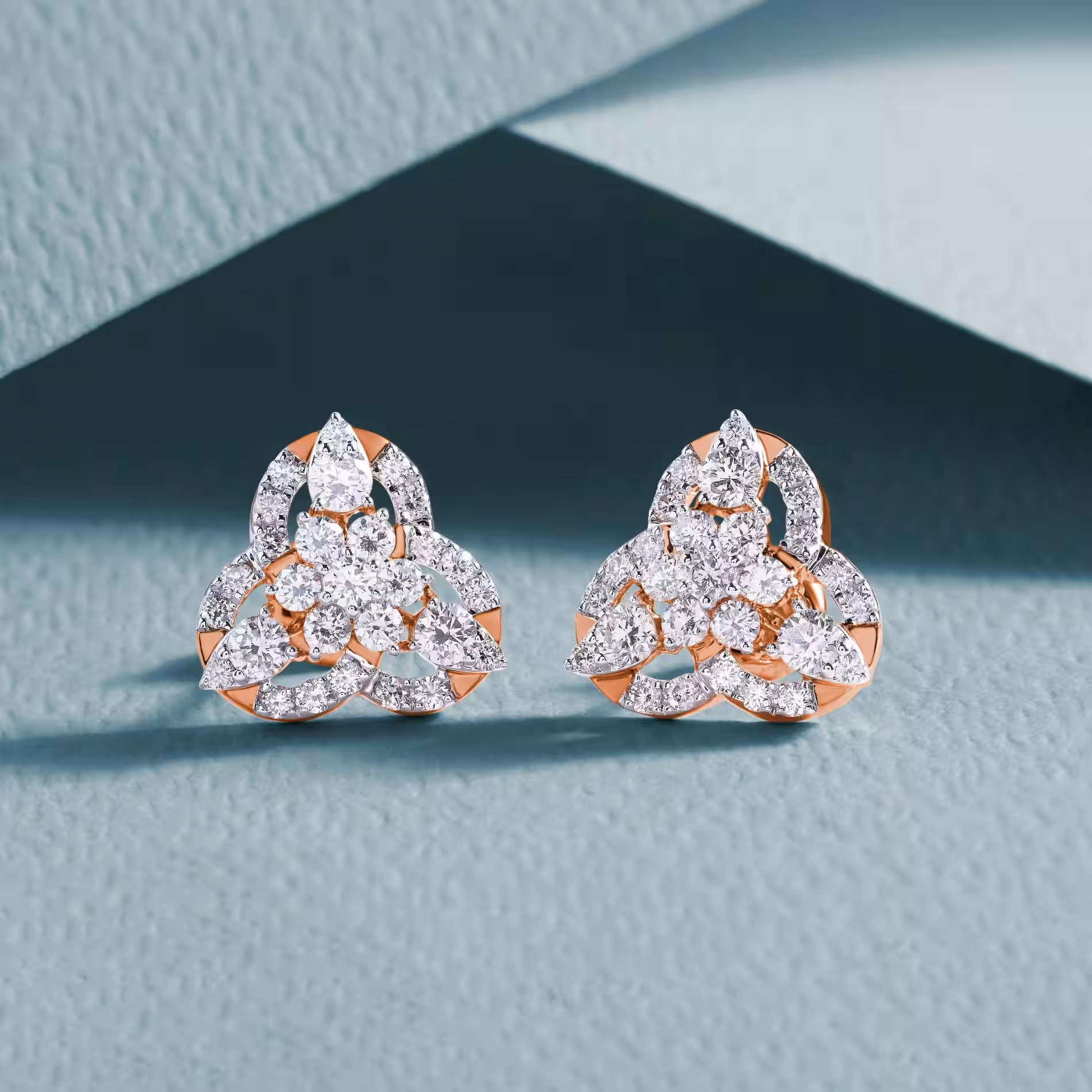
Imagine losing one diamond earring from a pair you’ve worn for years. Or watching an antique dining chair suffer irreparable damage while the other seven remain untouched. For many high-value possessions, their worth comes from the fact they belong together.
When one piece is lost or damaged, replacing it isn’t always enough to restore what you had.
That’s exactly why Stanhope’s high-value home insurance can include pairs and sets cover, helping protect the value of the collection as a whole rather than just the individual item, where policy terms are met.
What is pairs and sets cover?
Pairs and sets cover protects your possessions when their value, appearance or usefulness depends on them being together. If one item’s lost, stolen or damaged, it can allow the whole pair or set to be considered, rather than just the individual piece, where a valid claim is made and the policy terms are met.
This is often more important than you may think. A pair of antique earrings, a rare book series or a silver tea service may have taken years to acquire, and replacing one piece doesn’t necessarily restore what made the original so valuable. Even when a similar item can be found, differences in age, craftsmanship or condition can leave the collection feeling incomplete.
That’s the principle behind pairs and sets cover. If replacing a single item wouldn’t genuinely put you back in the position you were in before the loss, the policy can treat the pair or set as a whole.
Why this is important
One of the most common assumptions we encounter is that insurance is simply about replacing what’s been lost. For everyday household items, that’s often true. But high-value homes and possessions are different.
Many contain pieces that have been collected over decades, inherited through generations or commissioned from specialist makers. Their value often lies in craftsmanship, rarity and how the pieces relate to one another.
If one item disappears, the remaining pieces can become less valuable, less practical, less visually balanced and difficult or impossible to replace accurately.
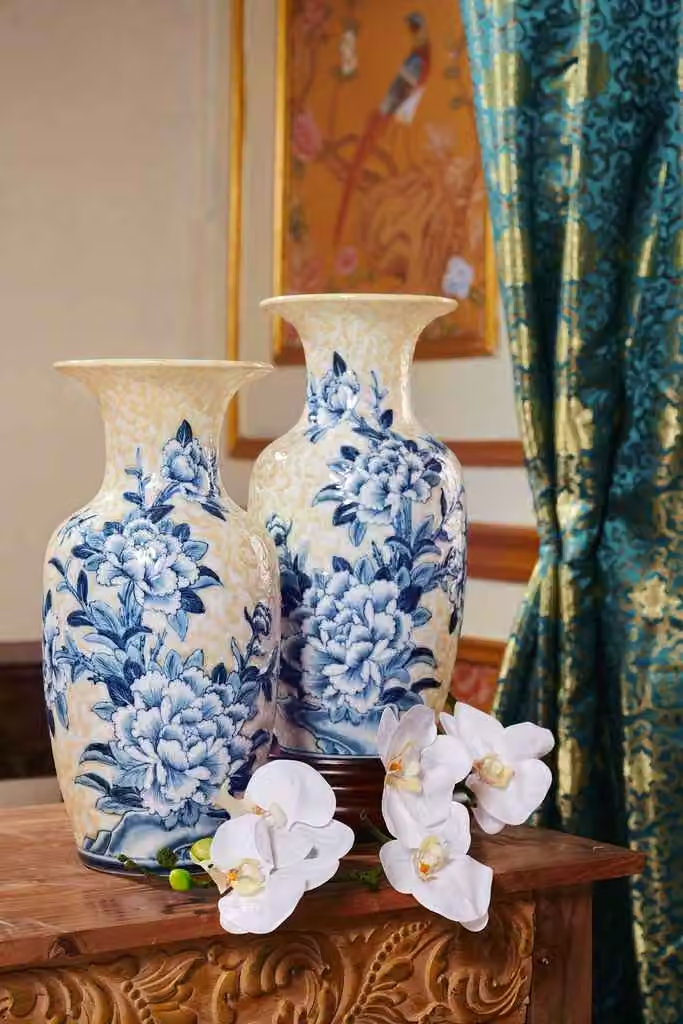
Take a pair of antique lamps. Even if you could source another lamp from the same maker, differences in age, wear, patina or restoration may mean they no longer match. The same applies to jewellery, furniture, artwork and many private collections.
What types of items can pairs and sets cover apply to?
Although people often think of earrings first, pairs and sets cover extends much further than jewellery. It may be relevant for:
Jewellery
Furniture
Art and interiors
Tableware
Collections
The common thread here is why these things belong together. If losing or damaging one piece would reduce the value, appearance or completeness of the whole, it’s worth checking whether your insurance reflects that.
Why finding a replacement isn’t always possible
It’s often the case that valuable things can’t simply be replaced by buying another one. Especially when they’re passed down through generations.
Many high-value possessions are antiques, handcrafted pieces, limited editions or bespoke commissions. Even where a similar item exists, it may have been made using different materials, by a different craftsperson or at a different point in time. Years of natural ageing, restoration or everyday use can also give an item a character that’s impossible to recreate.
The same is true of modern jewellery. Diamonds vary in colour, clarity and cut, while manufacturers regularly update designs and settings. As a result, two pieces may look almost identical in a catalogue, but noticeably different when worn side by side.
This is why we look beyond an inventory of individual items. We take the time to understand how your possessions relate to one another, because those details often determine whether replacing a single piece would genuinely restore what you’ve lost.
What happens if you lose one earring?
Losing a single diamond earring is one of the most common examples we see in pairs and sets claims.
On paper, replacing one earring might seem straightforward. In practice, finding a diamond with the same characteristics, setting and appearance can be far more difficult, particularly if the original pair has been worn and aged together over many years.
You may end up with two earrings, but not the pair you had.
Where policy terms allow, our pairs and sets cover can replace both earrings, helping to restore the pair rather than leaving you with one original and one imperfect substitute that you just can’t see past.
How pairs and sets cover differs from standard contents insurance
Standard contents insurance can often focus on the individual damaged item. One of the advantages of specialist high-value home insurance is that it can take a more considered approach to collections, jewellery and other belongings where the loss of a single item affects the value of the whole
| Standard contents cover | Stanhope pairs and sets cover |
|---|---|
| May replace only the damaged item | Can consider the pair or complete set |
| Focuses on individual item value | Considers the value of the collection as a whole |
| Suitable for many everyday possessions | Particularly valuable for rare, specialist and high-value belongings |
For homeowners with valuable collections or carefully curated interiors, your cover can make all the difference after a claim.
Keeping your pairs and sets properly insured
Good insurance starts long before you ever need to claim.
One of the things we regularly encourage our clients to review is how valuable pairs and sets are recorded within their policy.
Rather than thinking about individual items in isolation, consider whether they should be insured as a complete collection. It also helps to keep supporting documentation up to date, including:
● Professional valuations
● Purchase receipts
● Certificates
● Photographs
● Provenance records
● Inventories
For jewellery, artwork and antiques especially, these records make it much easier to demonstrate how items belong together and why replacing only one piece wouldn’t restore the original set.
Values can also change significantly over time. A collection that comfortably fit within your insurance limits ten years ago may look very different today.
Speak to Stanhope about pairs and sets cover
How we approach pairs and sets
At Stanhope, we don’t start with a product. We start by understanding why it matters to you.
This means asking questions standard online quotes rarely do.
Has your collection grown over the years? Are pieces displayed together? Have items you’ve inherited ever been professionally valued? Would replacing one item genuinely restore what you’ve lost?
Those conversations help us recommend cover that reflects how your possessions are actually owned and valued, rather than simply treating every item as another entry on an inventory.
It’s a key part of the approach that’s shaped our business since our beginnings in specialist insurance. We believe thoughtful advice should come before policy features because that’s often where the biggest risks are uncovered.
When should you review your cover?
Life doesn’t stand still, and neither do the belongings you choose to keep, collect and pass on. Perhaps you’ve inherited jewellery, added to your art collection, purchased antique furniture or simply haven’t updated your valuations for several years. Even without making a major purchase, the value of collections can change over time, and insurance that was appropriate a few years ago may no longer reflect what you own today.
Protect what’s valuable together
Some possessions are worth far more than the sum of their individual parts.
Whether it’s a pair of cufflinks, a set of collectable figurines that’ve aged together or a collection built over many years, replacing one missing piece doesn’t always restore what made the original so valuable.
This is why pairs and sets cover is so important.
If you’re unsure whether your current insurance covers your belongings properly, we can help you review your policy and identify any areas that deserve closer attention. Simply get in touch with us to begin.
Get a quote now
Pairs and sets cover FAQs
-
What is pairs and sets cover?
Some possessions are worth far more than the sum of their individual parts.
Whether it’s a pair of cufflinks, a set of collectable figurines that’ve aged together or a collection built over many years, replacing one missing piece doesn’t always restore what made the original so valuable.
This is why pairs and sets cover is so important.
If you’re unsure whether your current insurance covers your belongings properly, we can help you review your policy and identify any areas that deserve closer attention.
Simply get in touch with us to begin.
-
Does Stanhope high-value home insurance include pairs and sets cover?
Yes. Our high-value home insurance includes pairs and sets cover, subject to the policy wording, limits and claim circumstances.
-
Will insurance replace both earrings if one is lost?
It can. If replacing a single earring wouldn’t properly restore the original pair, our cover can replace both earrings where the policy terms are met.
-
Does pairs and sets cover only apply to jewellery?
No. It can also apply to furniture, artwork, antiques, tableware and collections where the items are intended to remain together.
-
What if an identical replacement can’t be found?
This is one of the main reasons pairs and sets cover exists. If a matching replacement isn’t available, the policy can consider replacing the complete pair or set, subject to its terms and conditions.
-
Do I need valuations for pairs and sets?
Professional valuations are often recommended for high-value jewellery, artwork, antiques and collections. Keeping these up to date helps ensure your insurance reflects their current value and makes claims easier to support.
Written by William Cooper
I started insurance broking in 2009. I followed my great-grandfather, grandfather, and father into the world of insurance. In 2019, I decided I wanted to do things differently. I formed Stanhope in 2019 with Matthew Ashton and Rachel Living. We want to shake up the industry! Let's make insurance cool and useful for our customers. Let's improve the customer journey and get them to trust us as their insurance company. Let's pay claims quickly; let's be excellent and honest in all that we do!