
Written by
Reviewed by William Cooper
Follow us
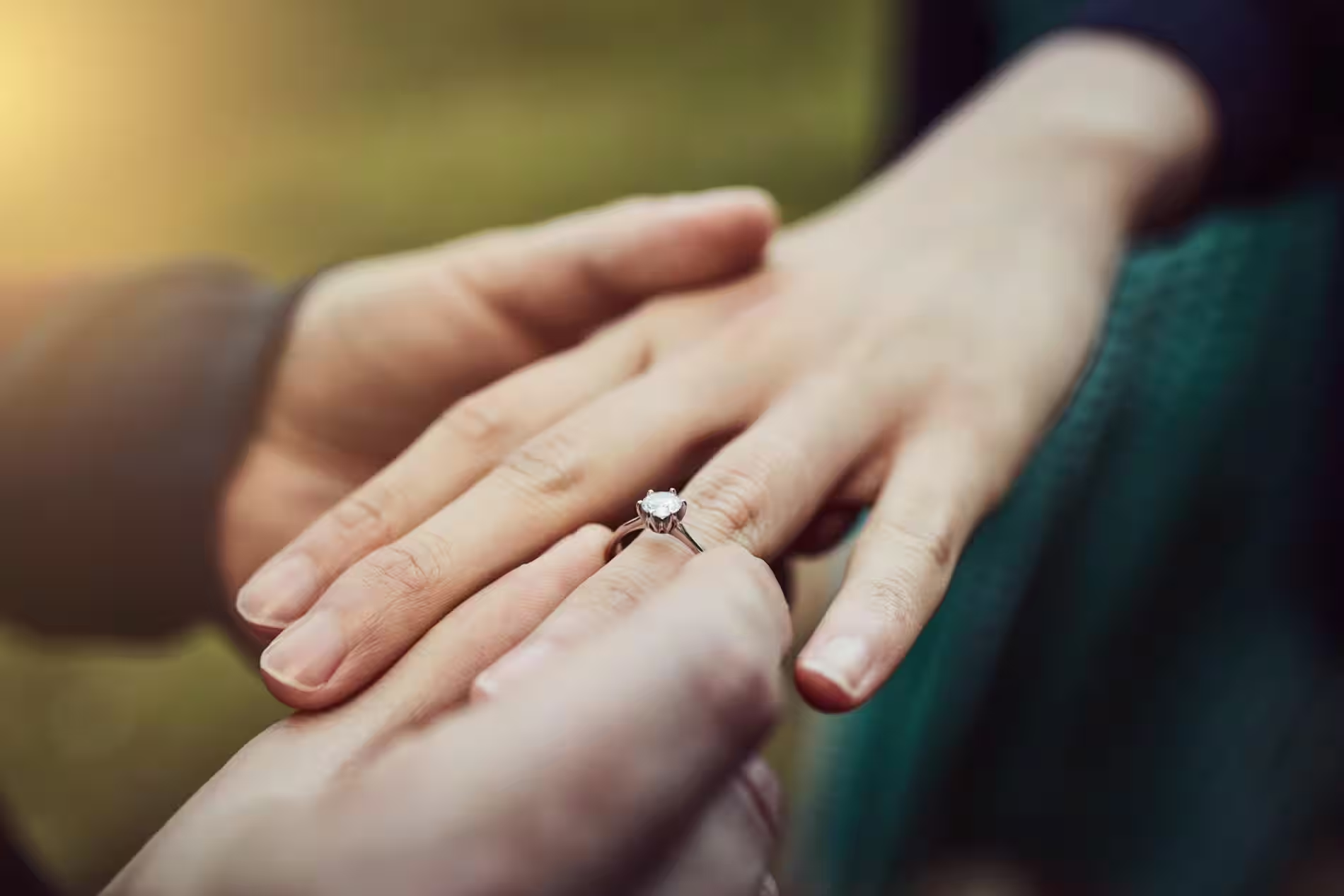
When it comes to engagement rings, their true value lies in the eye of the beholder. An engagement ring is not so much a precious metal as it is a memory, reminding people of a priceless connection.
How much should I spend on an engagement ring?
There’s no set amount anyone should spend. It really comes down to personal preference and what feels financially comfortable for you personally.
The popular idea that the cost should equal two months’ salary actually simply began as a 1930s marketing campaign by the De Beers diamond cartel to increase sales. It was originally suggested to spend one month’s salary, but the figure gradually crept up over the decades.
Today, it’s widely recognised as an entirely arbitrary rule – not a standard to measure love or commitment.
In a poll by wedding planning website ‘Hitched’, it was found that 41% of people were given an engagement ring costing less than £2,000, over a third wore an engagement ring costing between £2,000 and £4,000, and nearly a quarter have an engagement ring worth over £4,000.
No matter the cost, it’s essential to make sure you have the right engagement ring insurance in case of any loss, theft, or accidental damage.
Here’s our guide on insuring your precious engagement ring:
When should I insure an engagement ring?
We would recommend insuring the ring immediately upon purchase or at the latest before the proposal. This means that you’re protected from the outset in the event of loss, damage and theft.
Should I insure my engagement ring on its own?
For many, it’s helpful to insure an engagement ring on a standalone basis. This is because:
- It’s discreet – The ring won’t be seen on your household insurance schedule
- It hides the cost – Useful if you want to keep the value of the ring under the radar
- It suits different lifestyles – Should you live at a different address to your fiancé, for example
- It accommodates different levels of home insurance – Standalone cover might be more suitable if your general buildings and contents insurance is modest
If you already have an extensive jewellery collection, you might benefit by including the ring under your High Value Home Insurance. You can read more about this in our High Value Home Insurance Guide.
What are the benefits of standalone engagement ring insurance?
When insuring standalone jewellery with Stanhope, you can benefit from:
- Premiums from £58.60 per annum*
- No excess
- Worldwide cover
- Cash settlement if the item cannot be restored or replaced with one of comparable quality
- All risks cover including loss, theft and accidental damage
How much should I ensure my engagement ring for?
The amount you insure your engagement ring for isn’t always the same as what you paid for it. In many cases, the insurance valuation can be higher than the purchase price.
For insurance purposes, you should always cover your ring for its total replacement value as new in the UK, not the amount you originally paid. When you buy an engagement ring, you should receive a valuation certificate as part of your purchase documents. This certificate reflects the ring’s full replacement value based on current market prices, tax, labour and any other associated costs.
It’s also common for the purchase price to be lower than the valuation. Jewellers may have special arrangements with wholesalers or may offer discounts at the time of sale. These savings wouldn’t apply if you needed to replace the ring like‑for‑like.
If the ring is second‑hand, you should insure it for the amount it would cost to replace with an item of similar age, condition and value in the UK. We recommend getting a professional valuation for any second‑hand piece to make sure your cover is accurate.
How often should I have my item valued?
The typical rule of revaluation is every three years to accommodate the volatile cost of precious metals. According to The Guardian, the cost gold and silver begin the year strong, before a sharp drop early February 2026. Since their peak in 2022, the price of diamonds has since weakened but are expected to show less movement this year. These market fluctuations are important when determining the correct value of your ring.
Should I send a copy of my valuation to my insurance broker if I take out a policy?
In short, yes. Sadly, the jewellery market is littered with fraudulent claims. To limit such claims, it is essential for the broker to establish that (a) the items exist, (b) there is an insurable interest between the item and the owner on the schedule, and (c) the item is insured for the correct value. This is the best way to do so. Sending a valuation to your broker also helps speed up the claims process.
What should I look out for when choosing an approved valuer?
An approved valuation is one that is dated within five years of the policy start date and has been completed by a jeweller who is a member of one of the following recognised professional bodies:
- Institute of Registered Valuers (IRV)
- National Association of Goldsmiths (NAG)
- National Association of Jewellers (NAJ)
This approved valuation report should include the following:
- the cut, colour, clarity, and carat of the diamond (if applicable)
- address and name of the valuer
- address and name of the item owner
- value and description of each item
- date the valuation was carried out and additional supporting documents
Insure your engagement ring with confidence
If you choose to insure your engagement ring, make sure that it is covered with the right product for your requirements. If you would like to discuss your options with the Stanhope team, call us on 01730 202061. We also offer a free online quote and buy service, helping you get a quick quote and cover today.
Get up to five quotes now
Get an instant quote
Spoke to Emily Phillips who directed me to the website initially, it’s a very simple process and I was able to find the most appropriate cover for my fiance’s engagement ring at a decent price.
5 Star Review ReviewsIO
Written by Matthew Ashton
I started working in the insurance industry in 2004. Four years later, I left to focus on theological studies, working as a youth worker and then as a ministry director in Seattle, USA. When returning to the UK, I had an opportunity to work for the late Andrew Marchington. I joined his firm as a sales advisor when it had around ten staff members. Within three years, I was Head of Ops with a staff team of over 30 people. After a chance encounter in 2019 with Rachel Living and Will Cooper, I co-started Stanhope to build a high-value home, luxury watch, and jewellery broker synonymous with trust. I love being with Donna, my wife, and four kids when not working, cramming in the odd row, or run when I can. I am fortunate to love what I do and consider it a blessing to grow the Stanhope brand.