A household proposal form can be a daunting and intimidating document, filled with questions that may not seem relevant at first glance.
But, believe it or not, every question on our household proposal form is there for a reason, with each allowing us to glean important information about your property before proceeding with a policy. Here, we go through each of the questions on the form to explain why they’re there – and why it’s so important you provide the correct information.

Cover details and requirements
Current building and contents insurer, excess and premium
We ask about your existing policy for a number of reasons:
- Some insurers have a minimum premium amount, so knowing existing policy details helps us to know which insurers would be suitable for you
- To help us gauge where in the market we should place our focus when finding you the right cover
- In certain instances, we may not be able to offer a better premium or policy terms than your existing insurer, and we’ll always be honest about that.
Year of build
Each of the insurers we work with have their own risk appetite, e.g. some won’t insure very old buildings while others will. Your property’s year of build helps us to know which insurers to approach with your policy and be able to assess the risk accordingly.
Property type (detached, semi-detached, etc.)
Different types of buildings have different vulnerabilities. It follows that your property type will impact your cover and premiums. For instances, detached houses, being freestanding with no shared walls, are less vulnerable to fire damage from neighbouring properties. This is just one of the many factors that insurers will consider when they ask for your property type.
Is the property listed? (If so, provide listing)
A listed property can often entail very complicated repairs and restorations if it’s damaged, and that will not only impact your premiums but impact the type of home insurance policy that’s best for your property. Another reason we ask if your property is listed is because it will determine the insurers we work with, as not all insurers accept listed properties while others may specialise in them.
Is the property in a conversation area?
A conservation area is a legally designated area of special architectural or historical interest, the character of which is considered valuable and should be preserved. In a conservation area, some developments and renovations might be restricted because the area is legally protected. This is something insurers need to know, especially in the event that your property is damaged.
Does the property have a basement/lower ground floor? (If yes, what is it used for?)
Basements can unfortunately come with a whole host of problems, from flooding to structural issues and more. We ask about whether or not you have a basement, and what it’s used for, to help us to get the most accurate picture of your property risk.
Has the property had the loft converted into a living space?
Home alterations can have a significant impact on your property’s value and its rebuild cost, which is something insurers need to know about.
Total number of bedrooms
Here, we’re asking for the number of rooms that were intended to be used as bedrooms, even if they’re not presently used as bedrooms, e.g., a study conversion.
We ask about the total number of bedrooms in your home because this impacts the total cost – and therefore the valuation – of your property, and therefore directly impacts your premiums. As well as this, some insurers are only able to underwrite properties with up to six bedrooms, so this section helps us to determine which insurers we can go to with your policy.
Type of construction of outside walls and roof construction
While standard homes are typically constructed with bricks and concrete, others may have thatched roofs, glass walls, timber frames, and other specialist features. All these things impact not only the cost of the premium but the type of policy available, as well as the terms of the policy.
Does any part of the property have a flat and/or felt roof? If yes, what’s the overall percentage of flat roof?
Flat roofs typically have a shorter life and are more prone to leaking than pitched roofs. If you have a flat roof, some insurers may only offer limited cover for claims related to leaks, and may require that it be inspected every two – five years if the flat roof is older than 10 years-old. If over 25% of your roof is flat, we’ll likely require more information. Google Maps is a good tool to get a rough estimate of what proportion of the roof is flat, if at all. Property surveys and surveyors can also provide more precise measurement.
Construction of flat roof (if applicable)
A flat roof can be made up of many different materials, including asphalt, glass, rubber and concrete. Each material will be significant to your insurer, which is why this features on the form.
Is the property in a good state of repair?
It’s important we determine that your property’s in a good state of repair, as properties in poor condition are seen as far riskier by insurers. That’s because they’re more vulnerable to damage and therefore more likely to incur costly claims. Some insurers may not pay in the event of a claim if the property has suffered damage as the result of poor maintenance. A good state of repair means that the property is safe, habitable, and structurally sound, while a state of disrepair could mean a number of things to compromise the building, including incomplete building works.
Do you intend to keep the property in a good state of repair?
A property that’s poorly maintained or damaged due to a lack of proper maintenance may be ineligible for a claim later on. In some cases, the insurer may decide to withdraw cover completely.
How is the property heated?
Insurers want to know how your property is heated because it tells them about the types of materials involved, e.g., oil, fire, wood, etc. If you have a fireplace or another type of open fire, there will typically be more questions you need to complete.
Details of wood burners/open fires
Any open fires, including wood burners, pose an increased fire risk. In some cases, an insurer may request a certificate of compliance to confirm that certain appliances were installed correctly, or that regular maintenance is carried out. Insurers may also apply additional terms to your policy, for example they may stipulate that the property have fire extinguishers or regular chimney sweeps.
Does the property have any external oil tanks?
An external oil tank may include bunded, double or single skin tanks. These are designed for storing heating oil, and is another question to determine what sort of potentially hazardous materials are in your home.
Has the property ever suffered from escape of water or burst pipe?
This question tells the insurer more about your property risk profile. Escape of water could mean a burst pipe or an internal leak, whereas ingress of water is water that comes into the property from outside, which would increase your risk. Some insurers might request you install a leak detector, and ask for evidence of how you’ve dealt with the issue in the past.
Is this the main residence for your and your family?
Insurers want to determine whether this is your main home or something else – e.g., a holiday home or second home. Understanding more about how the property is occupied throughout the year also helps us and them to understand your risk profile more fully and determine which insurer we place you with.
Is there anyone else living at the property?
Knowing who else lives in your household helps the insurer to determine what kind of policy you need. For example, the more people in your home, the more likely you are to make a claim.
Do you have any domestic staff (carers, au pairs, nannies, gardeners, etc)?
We want to know about any live-in staff you might have, as insurers may need to impose additional terms (even if they’re only temporary staff).
Is the property sufficiently furnished for normal living purposes?
Insurers want to know not only that your house is lived in but that it looks lived in, and that’s why we ask if your home is sufficiently furnished. A home that looks unoccupied or abandoned is vulnerable to break-ins, trespassers and squatters, which of course will have a knock-on effect on claims.
Do you spend time in any other residence?
Our high value home insurance is designed to cover your main residence, meaning that in our terms and conditions you’re only covered if you leave the property unoccupied for a set number of consecutive days. If you split your time between multiple properties, please tell us so that we can offer you the right type of cover and ensure that your cover is valid should you ever need to make a claim.

Are any business activities carried out from your home, excluding for clerical purposes?
We aren’t asking whether you work from home. Instead, we want to know if you’re running a business from your house, e.g., a home daycare, beauty salon, therapy, etc.
That might include any of the following activities taking place at your property:
- Running a business
- Seeing clients
- Keeping stock
- Making products/workshop
- Keeping cash.
If you do run a business out of your home, you’ll need to ensure you have business liability cover in place as a household policy won’t cover the liability.
Do business clients visit the premises? Do any employees work from the home address?
We ask this question for two reasons.
The first is security related. We want to know how non-household members are accessing the property and what they have access to – especially important when it comes to high value items. The second reason is that we want to make sure you have the right cover for others’ personal items. Often, high value home cover excludes items damaged or lost in a business capacity (i.e. by a client).
Is any business stock kept at the premises?
We want to know about any stock kept in the property because it’s a prime target for theft if anyone was to break into your home. It may also impact the amount an insurer would pay out to you in the event of a fire or flood.
Renovations and refurbishment
Are there any renovations or refurbishments planned within the next 12 months?
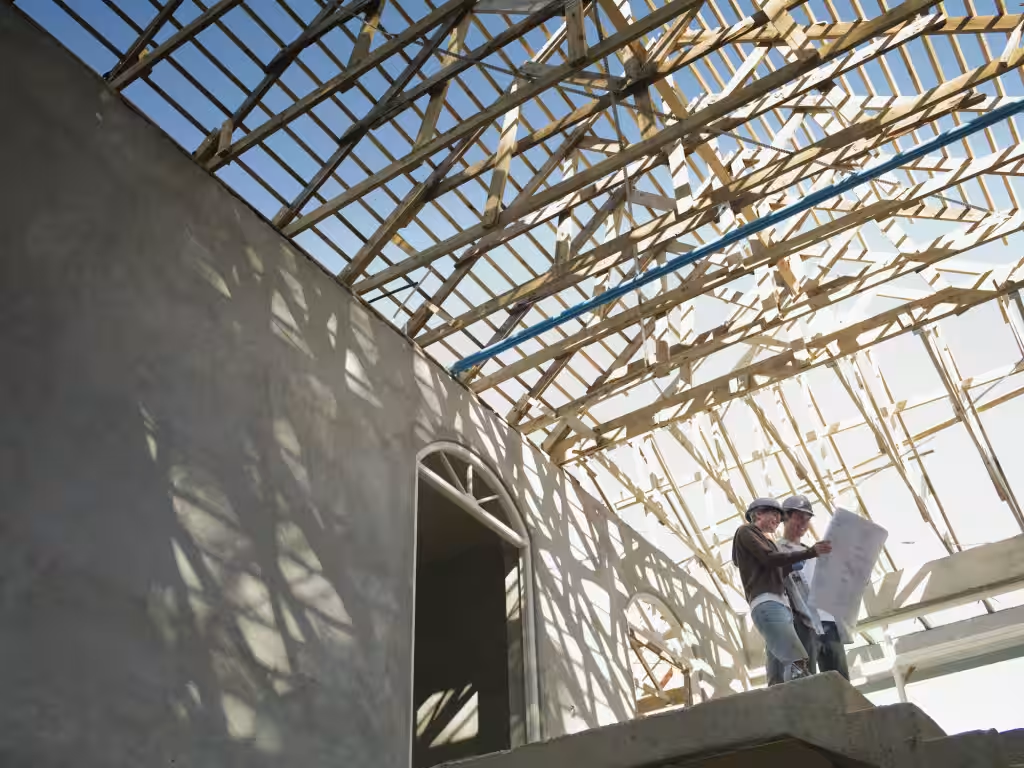
Insurers want to know about any home renovations you have planned because they increase the risk of damage or theft of the property. For extensive renovations or extensions, you’ll likely need specialist insurance.

Has the property ever shown signs of or had a history of subsidence, heave or landslip?
Properties that have previously experienced subsidence, heave or landslip can be at a slightly higher risk of further movement, especially if the original cause isn’t fully resolved. UK ground‑risk research notes that areas affected once are more likely to experience repeat movement where underlying soil conditions remain unstable.
Because of this, insurers will usually ask for evidence of any repairs before offering cover.
- Subsidence – the ground sinks beneath a property
- Heave – the ground moves upward
- Landslip – land shifts downhill
With the right investigations and repairs, many homes remain stable long‑term, but a history of movement is something insurers assess carefully – taking into account the cause, the remedy, and how long ago it was carried out.
Has the building ever shown signs or suffered from internal or external stepped or diagonal cracking?
While home surveys pick up a general risk of subsidence, cracks are a particular good subsidence indicator, which is why we put this question on our household proposal form – to better determine the condition of your property and whether you’ve looked into these potential issues.
Has the property ever been underpinned, had structural support or been monitored for subsidence, heave, structural movement or landslip?
In construction, underpinning is a method used to support buildings that have been affected by subsidence. Subsidence is something insurers want to know about (see above).
Has the house, grounds or neighbouring area ever flooded?
Insurers will ask about the property’s flooding history so they can accurately assess the risk profile and arrange the most suitable cover. Unfortunately, properties in flood-prone areas face more difficulties securing cover, and not every insurer will cover properties in flood-prone areas. That said, some insurers may operate under Flood Re, a joint initiative between insurers and the government with the aim of making flood cover more affordable. As part of the initiative, insurers will require that you have taken certain measures to prevent a flood from reoccurring.
Is your home located within 250 metres of a watercourse, flood plain, river, stream, tidal waters or an area that has previously suffered from flooding?
Similar to the above, this question is to determine whether your property is likely to be impacted by a flood or flood-related event.
Do you have more than three acres of land adjoining this property?
Some insurers can only cover a certain number of acres of land, although every insurer is different. If your property is on a big piece of land that exceeds that within the insurer’s terms and conditions, they may try and work out additional terms with you for an additional premium. What’s more, extra liability cover may be required here if you have property owners’ liability.
As well as knowing how much land your property is on, insurers also want to know what kind of activities take place on the land itself. For example, if a farmer is renting the land, insurers will want to know more about that, e.g., what’s kept on the land, who will take ownership in the event of a claim, etc.
Are the buildings or grounds open to the public?
As you can imagine, if the property or grounds the property is on is accessible to the public, that will have a significant impact on how likely you are to claim for accidents, injuries, damage and liability.
Are there any trees more than three metres high within seven metres of your home?
Don’t worry – insurers won’t refuse cover just because you have a tree, or trees, near your home. That said, insurers want to know about trees near the property, not merely to assess their risk of falling on your home, but also to evaluate whether the root system may impact the foundation or drainage of the home. That’s why we ask about the type, height and distance of the surrounding trees, and whether these trees are maintained annually or if they’re preserved.

Security and fire protection
Is there an active intruder alarm? If so, what’s the signal type?
Sometimes insurers will require that the property have a specific alarm system before they agree to insure the property. In this case, ‘signal type’ refers to how the device makes a noise and what it does, e.g., bells only, central station alert, alarm monitoring company, etc.
Is there a maintenance contract?
Here, we’re referring to any agreement you might have in place between you and a service provider that outlines ongoing upkeep and repair. This is simply to understand the level of maintenance the property receives as, on the other hand, neglecting property maintenance is seen as an increased risk by insurers.
Are there active smoke/fire detection signal types fitted on all floors? What is the signal type?
There are many different types of fire alarms, from conventional to addressable and wireless.
- Conventional alarms. The most common type, conventional alarms use a single alarm
- Addressable alarms can pinpoint the location of a fire in the home down to the room
- Wireless alarms detect possible fires and intruders
Some fire alarm systems are connected to a monitoring centre, which can alert emergency services if the alarm is activated. This is particularly important for high-risk properties like thatched or timber-framed homes.
Is there an active water leak detector installed? If so, what type of system is it?
Water leak detectors are designed to detect the presence of water in areas of your home where it shouldn’t be – e.g., under sinks or appliances. Water detectors will alert the homeowner via an audible alarm or smartphone that there’s an issue so they can then stop the leak.
If your property has a history of previous water escape, the insurer may request you install a water leak detector to manage your property’s risk.
Is there a fitted safe in the home? If so, list the make, model, type, and cash rating
This is something we ask to assess the level of security in your home. In a high value property, it’s particularly important that there’s proper containment for high value items. A high quality safe can deter theft and reduce your risk of burglary. Your claim can be declined if the safe used is found to not have the correct rating or to be improperly installed.
Insurers rate home safes so that you – and they – know how secure they are. A safe’s insurance rating takes into account the level of security and the maximum amount of cash the insurance company will cover when valuables are stored in the safe overnight.
Total property value/buildings sums insured
Your buildings sum insured or your total property value is the amount your insurer has agreed to pay out in the event you need to totally rebuild your property, e.g., if it was destroyed by fire.
This figure is based on estimates that take into account your property’s size, location, house quality, and the materials that make up your home.
If you’re at all unsure of your property’s rebuild cost, we would always recommend you have a rebuild survey performed on your behalf.
Value of any outbuildings and other permanent structures
This is referring to separate structures that aren’t attached to your main property. This could include sheds, garages, workshops, summerhouses, greenhouses, swimming pools, cabins, etc.
We know the household proposal form can feel like a lot, but every question helps us understand your home properly so we can find cover that truly fits. Sharing accurate details from the start keeps everything simple and smooth.
And remember, you don’t have to do it alone. If anything feels unclear or you just want a hand, we’re always here to help.
I started working in the insurance industry in 2004. Four years later, I left to focus on theological studies, working as a youth worker and then as a ministry director in Seattle, USA. When returning to the UK, I had an opportunity to work for the late Andrew Marchington. I joined his firm as a sales advisor when it had around ten staff members. Within three years, I was Head of Ops with a staff team of over 30 people. After a chance encounter in 2019 with Rachel Living and Will Cooper, I co-started Stanhope to build a high-value home, luxury watch, and jewellery broker synonymous with trust. I love being with Donna, my wife, and four kids when not working, cramming in the odd row, or run when I can. I am fortunate to love what I do and consider it a blessing to grow the Stanhope brand.