
Written by
Reviewed by Matthew Ashton
Follow us
If you’re thinking about investing, handbags probably weren’t your first thought – until, perhaps, you realised just how lucrative an investment they can be.
But where do you begin? How do you ensure you’re investing in the right bags? And is there a guaranteed return on investment?
In this blog, we’ll explore what makes luxury handbags worth the investment and highlight the most valuable bags you can purchase.
As with any investment, you’ll want to be prudent before buying and have the right knowledge on your side. Whether you own a luxury bag for investment purposes or not, handbag insurance is essential.
Key takeaways
- Why luxury handbags can appreciate in value
- The top brands worth investing in
- How to start your handbag investment journey
Reasons to consider handbag investing
Their value increases
Luxury handbags are unlike many other designer assets because they often appreciate significantly over time. Iconic bags from brands like Hermès and Chanel have soared in value, selling for much more on the second hand market.
Take a Hermès Birkin bag, for example: it starts at around £8,000 but can exceed £80,000 first hand. On the resale market, a Birkin often sells for two to three times its retail price.
High demand and scarcity
Hermès bags are made purposely scarce to fuel demand. Unlike with other luxury designers, you can’t simply go into a Hermès store and purchase anything you might want. Instead, the most popular models, in the same manner as Rolex, feature waiting lists that can stretch up to years. This sense of exclusivity naturally makes these bags even more desirable. According to Sotheby’s, in May 2025 alone, US Birkin prices rose between 4.4% and 5.9%. But even with price increased, demand remains strong, with some Birkin models are expected to exceed $20,000 within just five years.
Handbags are tangible assets
What makes handbags a particularly attractive asset is their tangibility: they can be handled and touched. That means you can use your investment in day-to-day life (within limits) and its quality and condition are within your control. On the flipside, that also means that it’s extra important to make sure you take care of your handbag. Not taking the proper precautions could result in your investment being damaged.
Which luxury handbags are the best investments?
If you’re looking at investing in a luxury handbag, there are three key brands that need to be on your radar:
- Hermès. Hermès is the pinnacle of handbag investment. Its Birkin and Kelly bags are coveted across the world as the height of luxury. Famously, Jane Birkin’s original Birkin prototype sold for $10.1 million at auction
- Chanel. Known for timeless designs like the Classic Flap, which rarely goes out of style. Scarcity keeps demand high
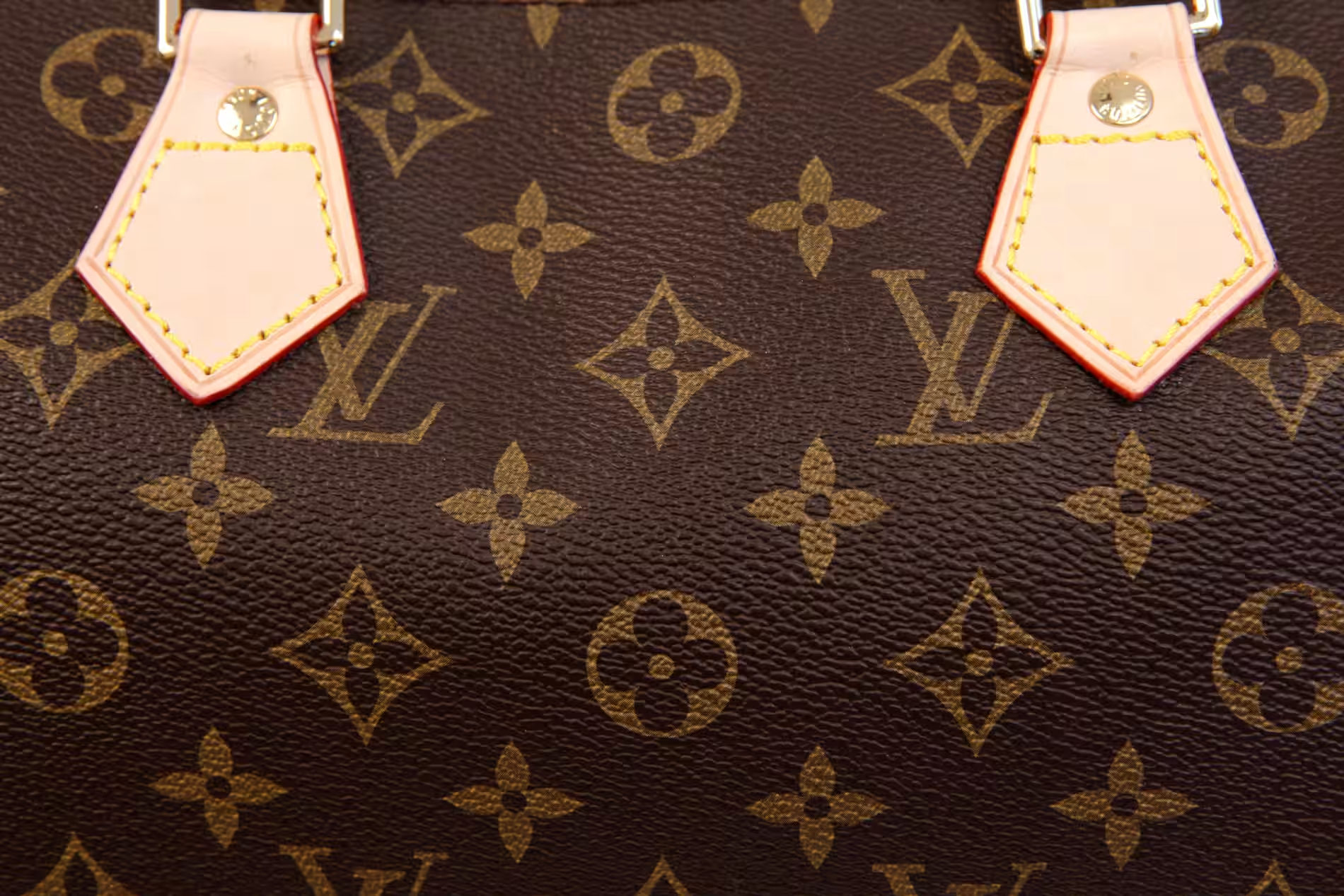
- Louis Vuitton. Durable, heritage pieces like the Neverfull and Speedy maintain strong resale value
How to start investing in luxury handbags
Learn the market
Before you invest in luxury handbags, you need to know your market. Not all luxury handbags offer equal investment potential – in fact, few do. You’ll want to learn not only which handbags have the greatest resale value but where to buy them and how to get them authenticated.
As we’ve touched on, the big three in luxury handbags are Hermès, Chanel and Louis Vuitton, but they aren’t the only brands worth investing in. Dior’s timeless heritage pieces like Lady Dior and the Saddle Bag are worthy mainstays. Gucci’s iconic Horsebit 1955 and Jackie 1961 are also worthy contenders.
It’s also important to keep an eye out for trends when it comes to investing in handbags. There’s no telling what might change in the existing market, or which luxury brand might emerge as one to watch in the future.
Choose your style
Style matters when it comes to investing in handbags. Trends come in and out of fashion; naturally, the luxury bags with the best resale potential are those with timeless designs.
Some collectors do specialise in specific styles which may not match your personal preference, so this is worth exploring before your purchase.
Find a reputable seller
Where you buy your luxury bag matters. You might buy direct from boutique or opt for a reputable secondhand marketplace. A secondary market Birkin goes for an average of 2.4x its retail price, for example, but buying secondhand should only be an option if the seller can provide you with a certificate of authenticity. If you’re able, you may want to be accompanied by a seasoned collector, for extra peace of mind.
Maintain your handbags
As you’ll be wanting to sell your bag later on, condition is everything. Any damage – including wear and tear – can negatively impact the cost of the bag, especially in the eyes of professional collectors.
That’s why it’s important to store and properly take care of your handbags, and follow the maintenance guidelines given by your chosen designer.
Handbag investing FAQ’s
How can I tell if my designer handbag is authentic?
Will my designer handbag increase in value?
Final thoughts
Luxury handbags can be just the investment you’re looking for, thanks to their potential for appreciation, exclusivity, and timeless appeal.
Brands like Hermès, Chanel, and Louis Vuitton dominate the market, but the success of your investment will depend on conducting proper research, buying carefully, and diligent maintenance.
I went online to get a simple quote and place cover promptly. Stanhope assisted with that. I had cover at a good price within 15 minutes. Really efficient and better than an alternative broker site I had used and given up on earlier in the day.
5 Star Review ReviewsIO
Written by William Cooper
I started insurance broking in 2009. I followed my great-grandfather, grandfather, and father into the world of insurance. In 2019, I decided I wanted to do things differently. I formed Stanhope in 2019 with Matthew Ashton and Rachel Living. We want to shake up the industry! Let's make insurance cool and useful for our customers. Let's improve the customer journey and get them to trust us as their insurance company. Let's pay claims quickly; let's be excellent and honest in all that we do!